
• Link to Instagram
  • Link to X
  • Link to Facebook
  • Link to LinkedIn
  • EN
  • ES
  • PT
  • ID
  • FR
Global Alliance of Territorial Communities
  • Home
  • About
  • News & Events
  • Movements
  • Shandia
  • Donate
  • Menu Menu

Yasuni Consultation: A Call to Protect the world’s most biodiverse forest against oil exploitation

August 6, 2023/in News/by GATC

The Yasuni National Park in Ecuador, the most biodiverse place on Earth and a sanctuary for Indigenous Peoples, faces the looming threat of oil extraction that could devastate its delicate ecosystems. On August 20th the Ecuadorian people will vote  on a groundbreaking consultation process to decide whether to keep exploiting oil or protect this crucial ecosystem and its cultural significance. 
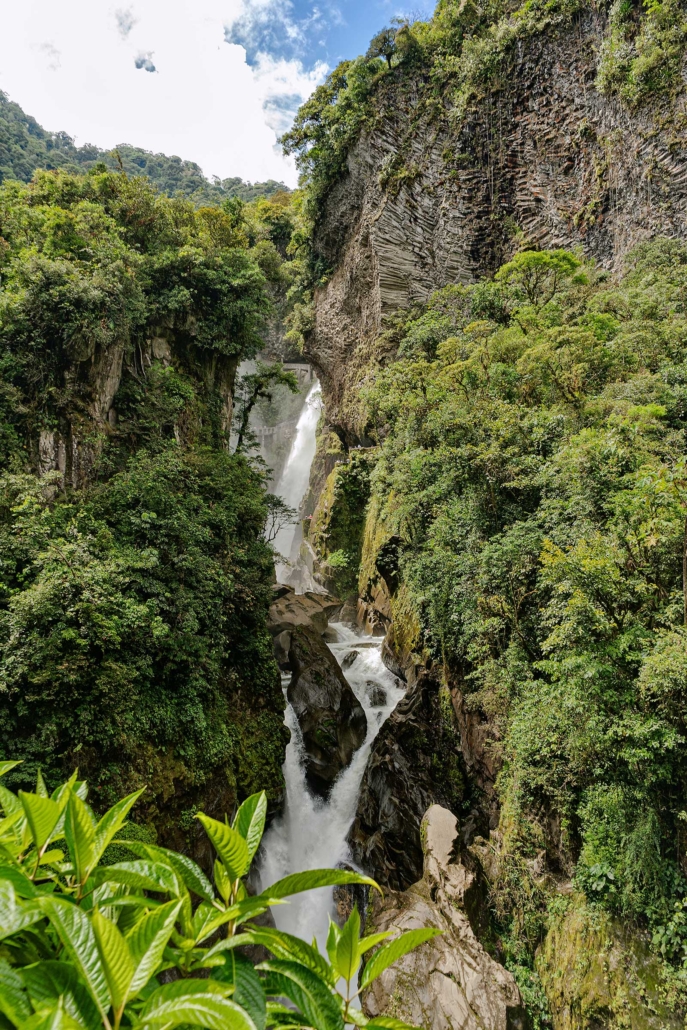
waterfall cradled by large trees in the Yasuni National Park in Ecuador
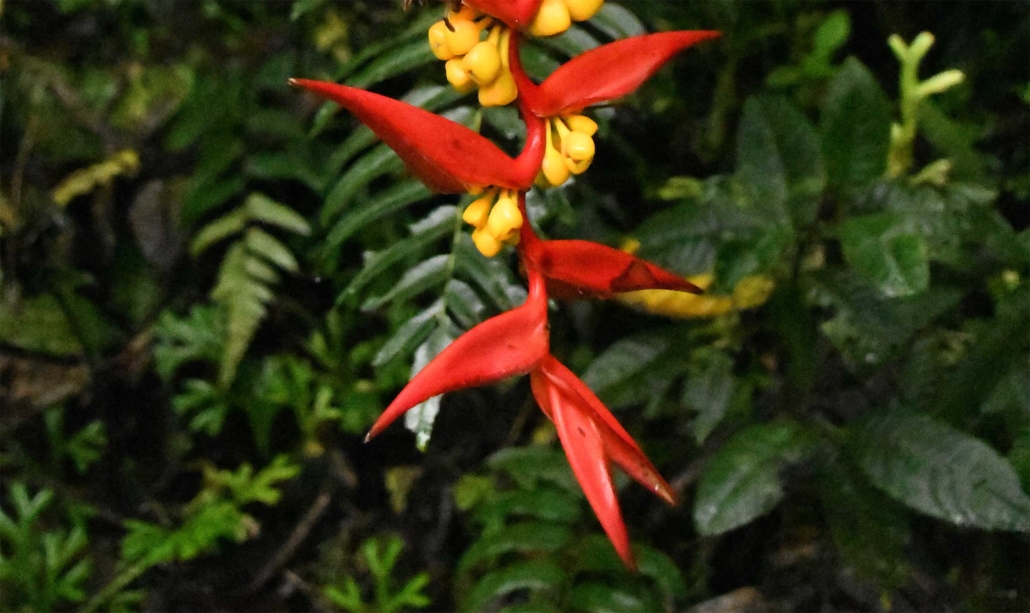
red heliconia in the Yasuni National Park in Ecuador
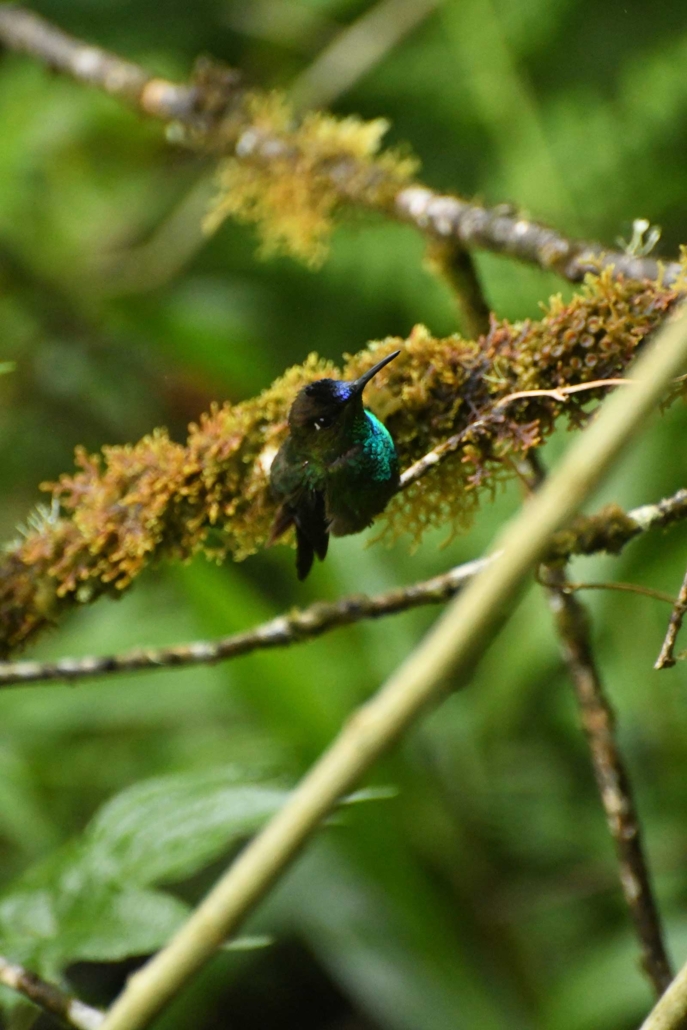
small green and blue hummingbird in the Yasuni National Park in Ecuador

In the heart of Ecuador lies the Yasuni National Park, a treasure trove of biodiversity and a sanctuary for Indigenous People. The Yasuni region has become a focal point of global environmental concern due to its potential for oil extraction, which poses a grave threat to its delicate ecosystems and the livelihoods of its indigenous inhabitants. As the looming decision regarding oil exploitation in Yasuni draws near, the Indigenous Peoples raise their voices in unison to champion the preservation of this invaluable natural wonder.

Yasuni is not just a patch of land; it is a living, breathing testament to Earth’s natural wonders. It boasts unparalleled biodiversity, home to countless plant and animal species found nowhere else on the planet. It is considered to be the most biodiverse place on Earth. This delicate balance sustains intricate webs of life and plays a vital role in maintaining the global climate. The Indigenous Peoples of Yasuni have lived in harmony with this ecosystem for generations, and their stewardship has allowed its incredible diversity to flourish.

However, the lush landscapes of Yasuni now face an imminent threat – the encroachment of oil extraction. While oil exploitation might offer short-term economic gains, the irreversible damage it could inflict on Yasuni’s ecosystems far outweighs any temporary benefits. The process of drilling, infrastructure development, and potential spills could lead to deforestation, soil and water contamination, and disruption of local wildlife habitats. Indigenous Peoples, who have lived sustainably in Yasuni for centuries, are at risk of displacement and loss of their traditional way of life.
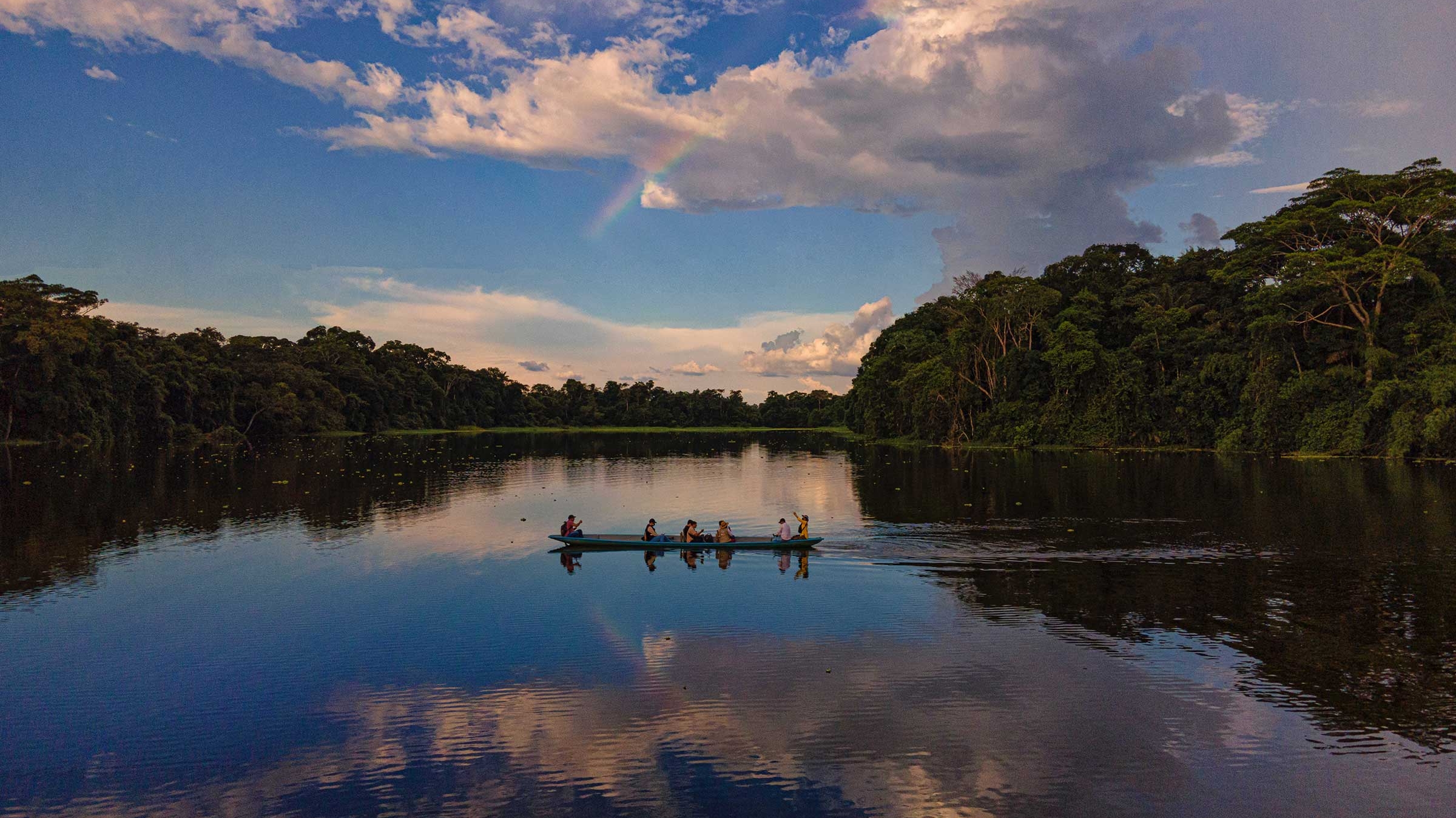
eight people in a canoe in the middle
of a river, floating under a rainbow in the Yasuni region, Ecuador

The Yasuni region is not only home to well-established indigenous communities but also harbours the rare presence of uncontacted Indigenous Peoples, the Tagaeri and Taromenane. They live in voluntary isolation, maintaining their traditional ways of life and remaining untouched by the modern world. The encroachment of oil exploitation poses an existential threat to these vulnerable populations, as contact with outsiders could introduce diseases to which they have no immunity and disrupt the delicate balance of their existence. 

In a groundbreaking move, a consultation process has been initiated to determine the future of oil exploitation in Yasuni. Indigenous Peoples, who have a deep spiritual connection to the land, are playing a pivotal role in shaping this decision. On August 20th, the people of Ecuador will express their democratic right through a consultation, making their voices heard and shaping the destiny of their homeland.

The Tagaeri, Taromenane,Dugakaeri, Waorani and Kichwa peoples are organised and are calling their nation and the international community to protect the ecuadorian Amazon by voting #SíalYasuni and by supporting their campaign through digital platforms. 

The Yasuni Consultation represents a beacon of hope for the preservation of one of the world’s most remarkable ecosystems. Indigenous Peoples stand at the forefront of this battle, defending their homes, cultures, and the delicate balance of nature. As the world watches, the Yasuni consultation serves as a testament to the power of unity and the collective determination to safeguard our planet’s irreplaceable treasures. Let us stand with the indigenous communities of Yasuni and ensure that this natural wonder remains untouched by the scourge of oil exploitation.

To support Indigenous Peoples in Ecuador, follow the Confederation of Indigenous Nationalities of the Ecuadorian Amazon and share their message (@confeniae1) and use the hashtag #SíalYasuni.

https://globalalliance.me/wp-content/uploads/2023/08/Yasuni-red-yellow-flower.jpg 1428 2400 GATC https://globalalliance.me/wp-content/uploads/2023/07/global-alliance-of-territorial-communities-logo-tight.png GATC2023-08-06 16:29:322024-10-12 22:36:32Yasuni Consultation: A Call to Protect the world’s most biodiverse forest against oil exploitation
group photo of Indigenous Peoples from Brazil along with allies during the Amazon Summit

Inclusive Dialogue at Amazon Summit: Indigenous Peoples must be at the centre of all dialogues

August 6, 2023/in News/by GATC

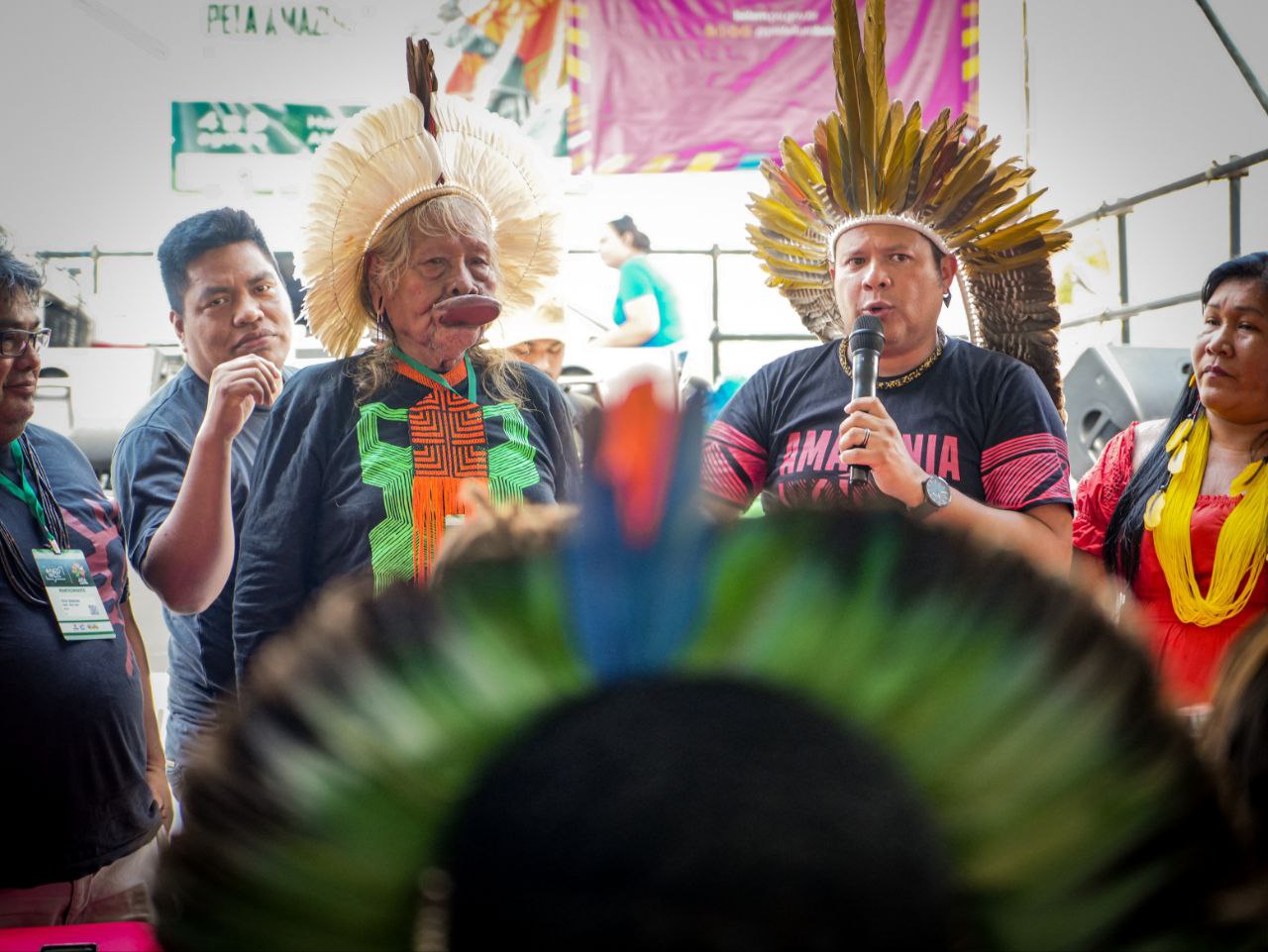
The Amazon Summit (8th and 9th of August) and the Amazon Dialogues (Diálogos Amazônicos) (4th to 6th of August) have sparked vital discussions about the preservation of the world’s largest rainforest and its immense ecological significance. However, it is crucial to emphasise that these discussions cannot be complete without the active involvement of the Indigenous Peoples and Local Communities who have historically been the most effective stewards of this invaluable ecosystem.

The importance of this inclusive approach was underscored by the Articulation of Indigenous Peoples of Brazil (APIB) and various indigenous organisations during the lead up to the Amazon Summit. The Indigenous Peoples of the Amazon came together to highlight the pressing issues surrounding the Amazon rainforest, particularly the threats posed by the Time Frame (Marco Temporal) thesis and the approaching “point of no return”. 

During the Amazon Summit the leaders of eight Amazon countries, Bolivia, Brazil, Colombia, Ecuador, Guyana, Guyana, Peru, Suriname and Venezuela will seek to renew the Amazon Cooperation Treaty (ACT) and its related organisation (ACTO). The goal is to achieve a comprehensive agreement for the Amazon’s future. However, it is imperative to remember that any approach to preserving the rainforest  must be informed by the collective wisdom of the people who have nurtured and protected these lands for generations. 

Kleber Karipuna and Chief Raoni Metuktire address a crowd during the Amazon Summit
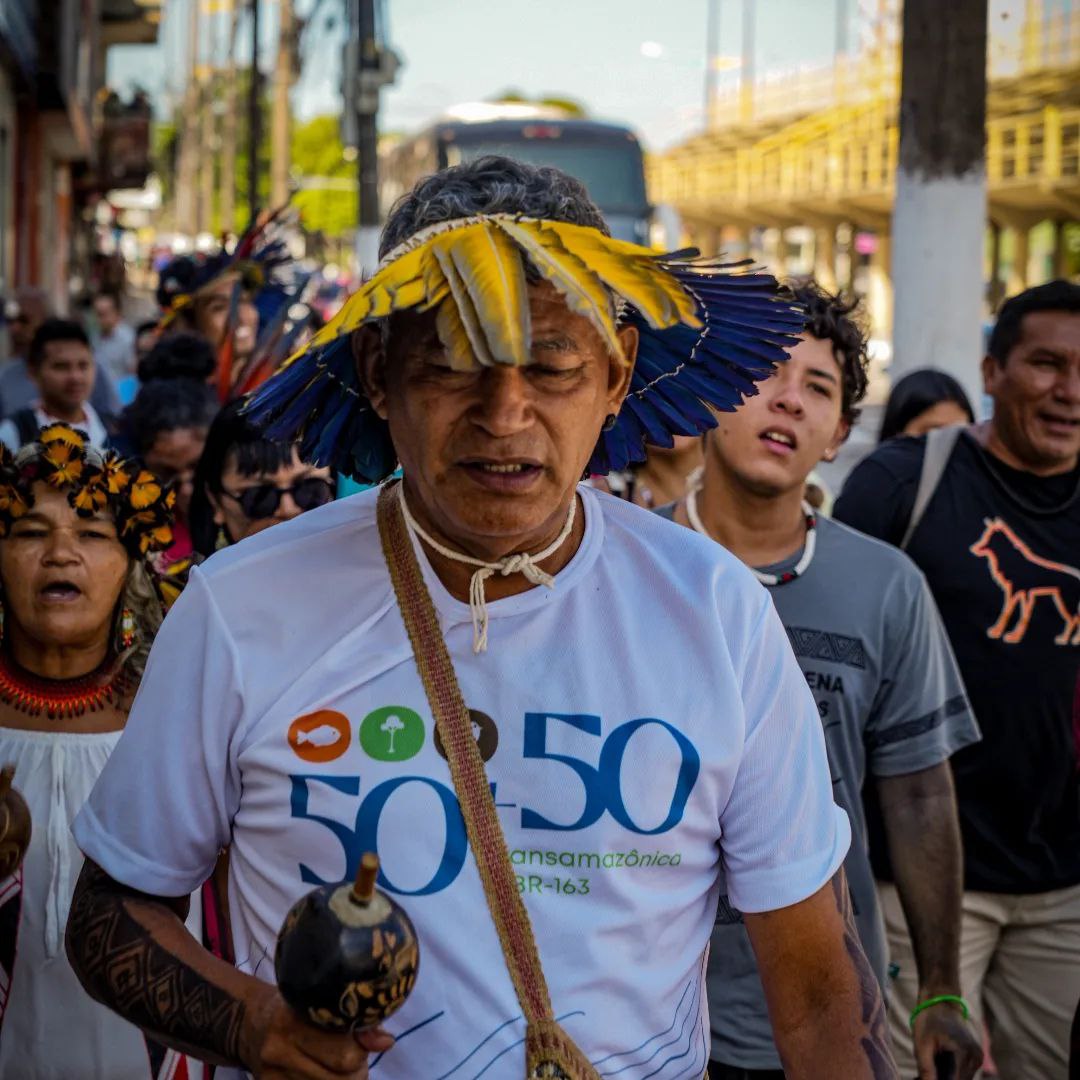
indigenous man in feathered head piece holds a traditional instrument during the Amazon Summit
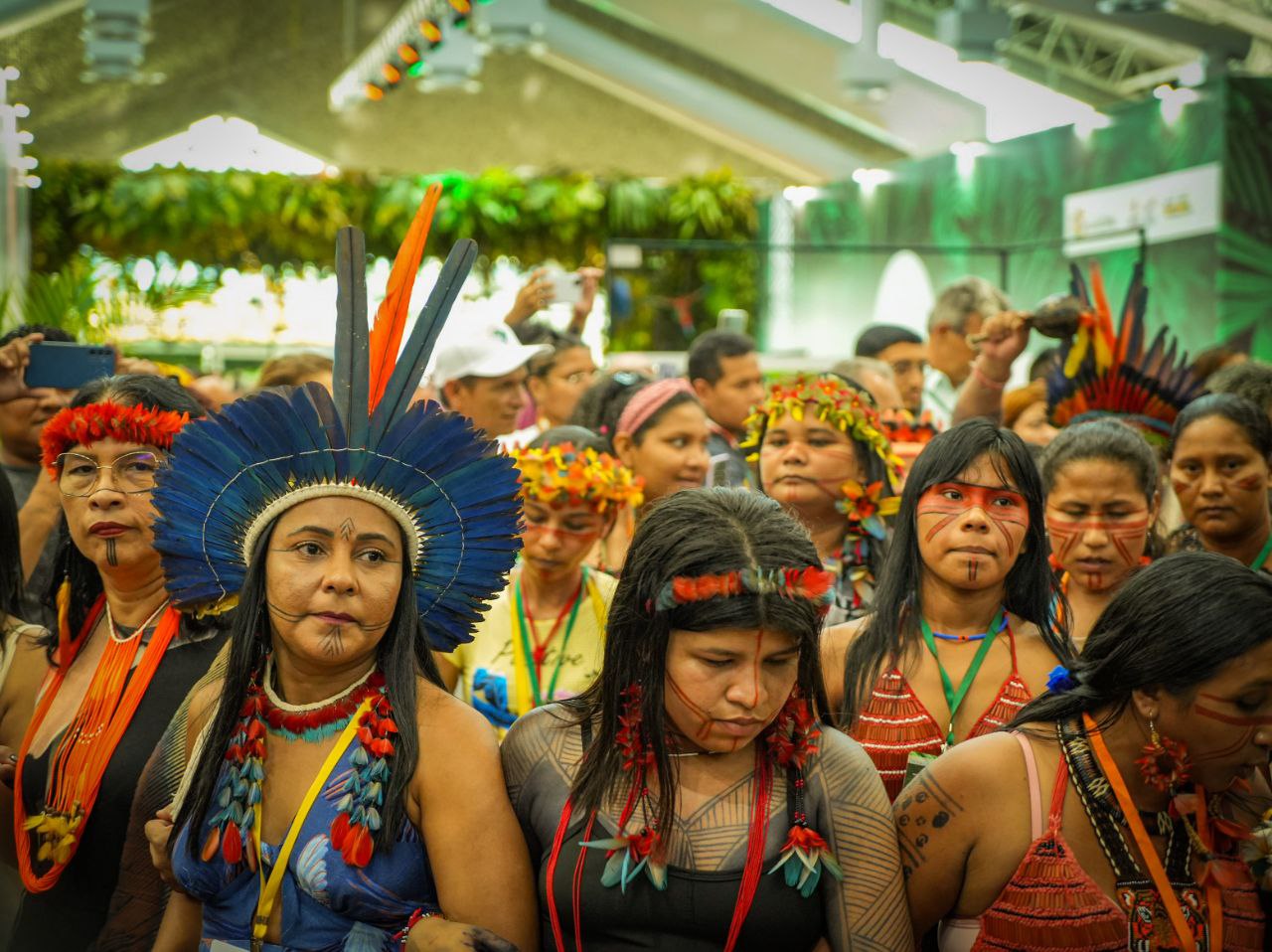
indigenous Brazilian women in traditional garments and jewelry stand in a crowd

Multiple studies, including recent evidence by the Monitoring of the Andean Amazon Project (MAAP), consistently support the idea that the preservation and sustainable management of the Amazon are intrinsically tied to the rights and involvement of its native inhabitants. In fact, indigenous territories in all the Amazon have lower deforestation rates than any other land, including nationally protected areas.

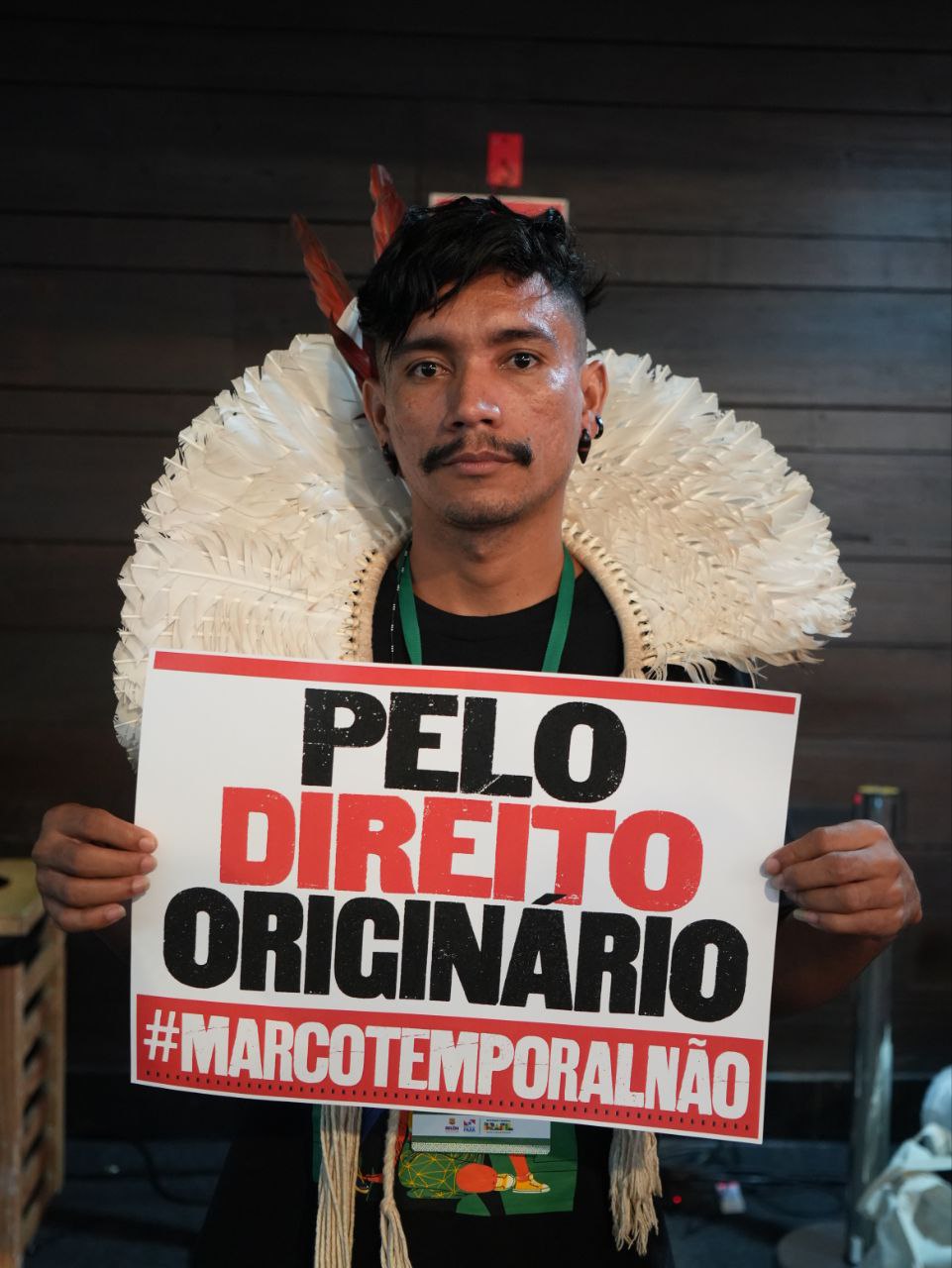
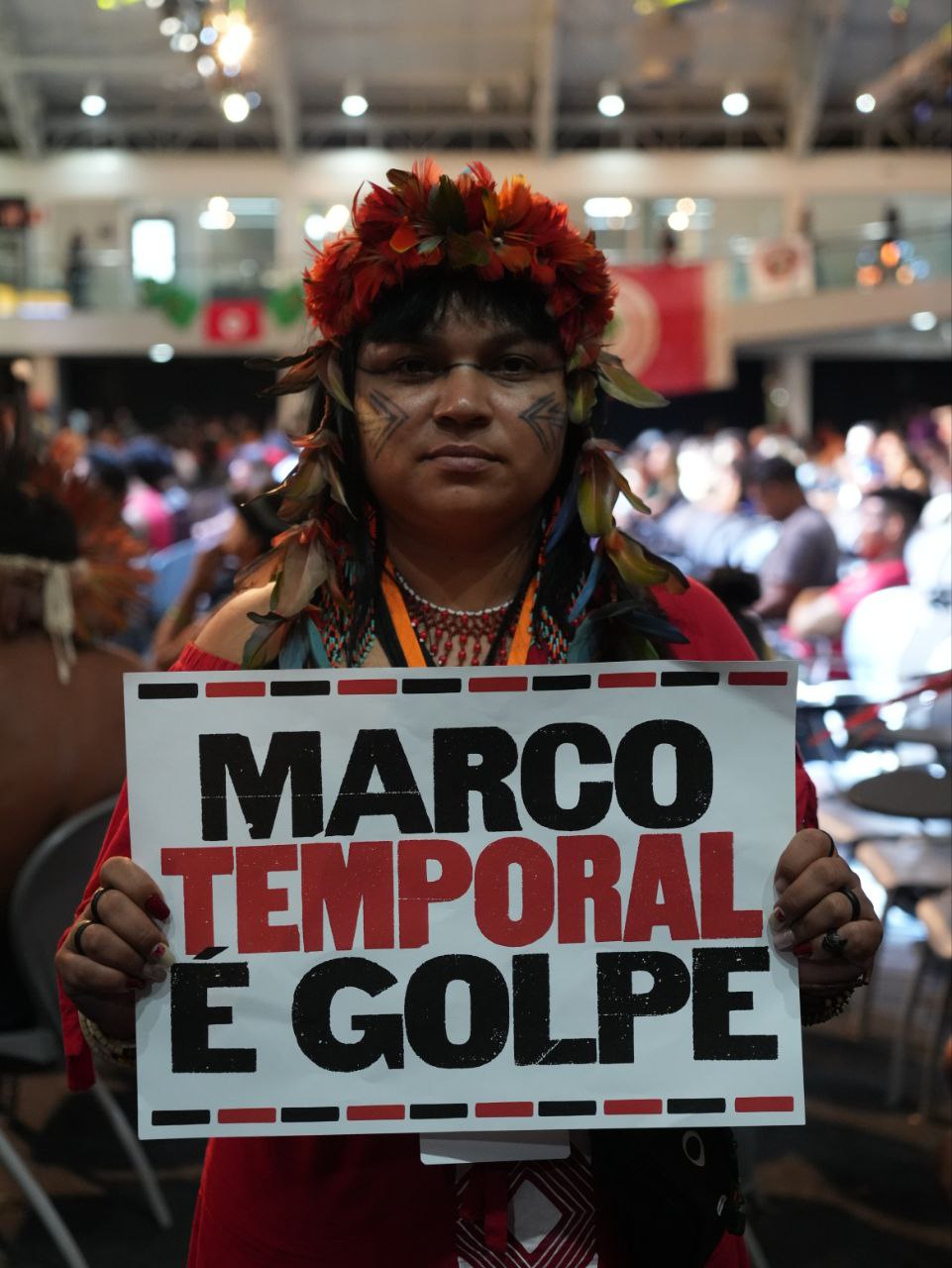
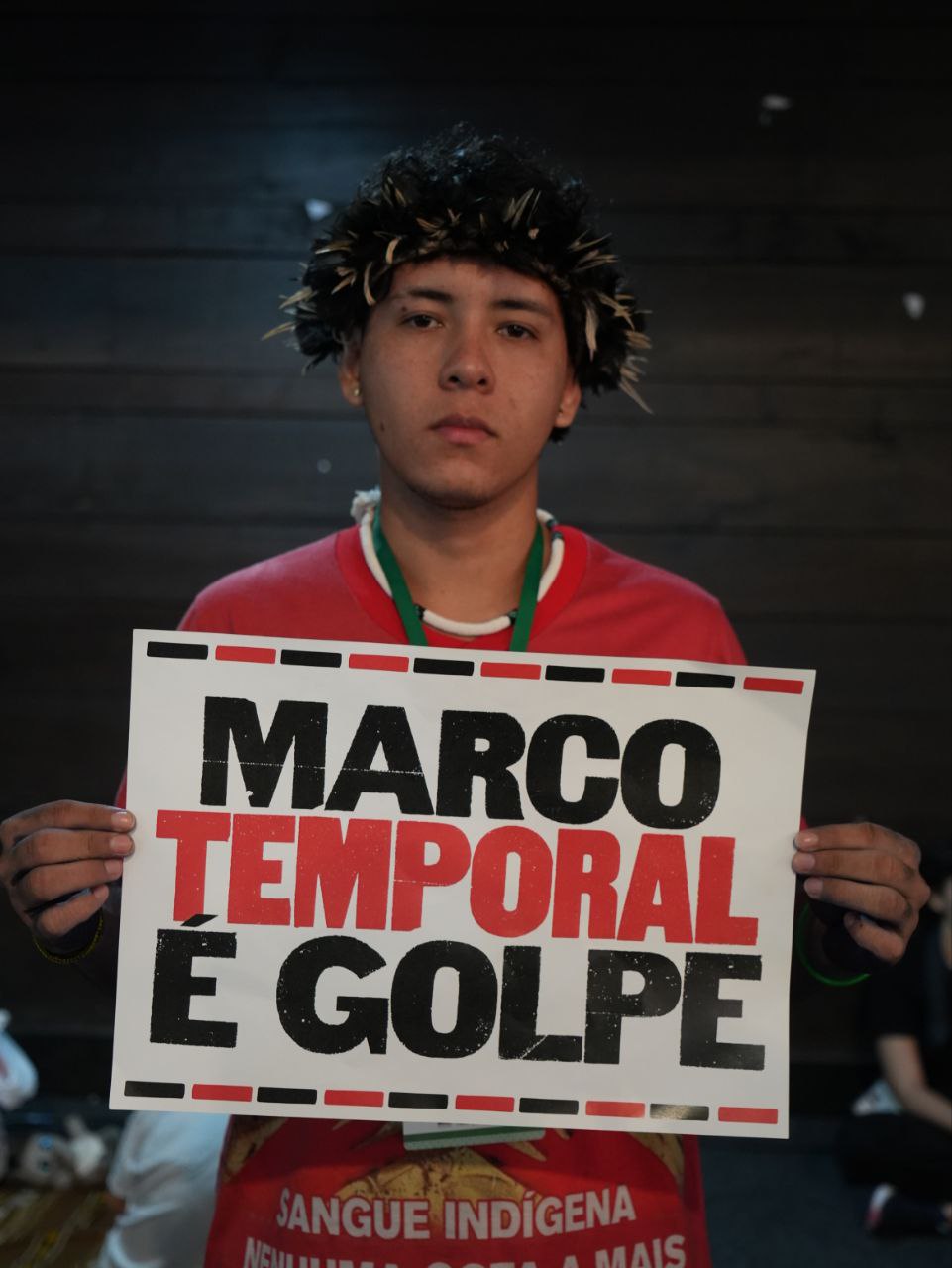
However, policy makers around the region are yet to commit to demarcating more lands to Indigenous Peoples, and some governments are doing the exact opposite. In Brazil indigenous peoples have been standing up against the Time Frame thesis, a legal argument that exclusively grants land rights to peoples who were present on or in contention of a specific piece of land on October 5, 1988, the day the Federal Constitution was enacted. This assertion fails to consider instances of displacement and the encroachment of settlements by land exploiters and timber merchants.

“We are more than 180 peoples in the Brazilian Amazon, and there is no way we could speak, there is no way we can dialogue about preservation without talking about demarcation of indigenous territories” , said Auricélia Arapiun from the Coordination of the Indigenous Organizations of the Brazilian Amazon (COAIB) during the the Amazon Dialogues plenary. “We do not want a discussion in which we are not heard. We want respect for our right to Free, Prior, Informed Consent; we want to see the effectiveness of policies that protect our territories” she added. 

indigenous youth holds up sign that says "Because of our ancestral rights, say no to the Time Frame Thesis"
young indigenous woman holds up sign that says "Time Frame Thesis equals coup"
young indigenous man holds up sign that says "Time Frame Thesis equals coup"

In a recent letter written by APIB and several other organisations of the region mentioned the following: “We demand that our own forms of territorial organisation and traditional and original occupation, which are independent and prior to State recognition, be considered” and also pointed out that “Discussing the future of the Amazon without Indigenous peoples is equivalent to violating our original rights and all the work we do for human life on the planet.”

As we move forward in our collective mission to safeguard the Amazon rainforest, it is imperative to ensure that the voices of Indigenous Peoples and Local Communities remain at the forefront of the conversation. The preservation of this invaluable natural treasure hinges on our ability to include and respect those who have been its guardians for time immemorial. Without their insights, traditions, and active participation, any debate around Amazon conservation would be incomplete and inherently flawed. Let us stand united in recognizing the significance of inclusive dialogue and equitable collaboration for the future of the Amazon and our planet.

To support Indigenous Peoples and Local Communities during the Amazon Summit follow and donate to the Articulation of Indigenous Peoples of Brazil (@apiboficial).

all photos: @cristian-arapiun

https://globalalliance.me/wp-content/uploads/2023/08/cristian_aparpiun-Cumbre-Amazonica-1.jpg 998 1600 GATC https://globalalliance.me/wp-content/uploads/2023/07/global-alliance-of-territorial-communities-logo-tight.png GATC2023-08-06 16:07:182024-10-24 22:43:25Inclusive Dialogue at Amazon Summit: Indigenous Peoples must be at the centre of all dialogues
a river in the Ecuadorian Amazon flows in the midst of large rocks

Protecting the World’s Forests Means Protecting Indigenous Rights

August 4, 2023/in News/by Juan Carlos Jintiach

Indigenous Peoples have proven to be the best protectors of our world’s natural resources. But their lands and traditional ways of life are under attack by extractive corporations that prioritise profits over sustainability, posing a threat to biodiversity and the future of all.

TENA – For more than 500 years, Indigenous Peoples in Ecuador have been fighting to protect their lands, culture, and very existence from the disastrous consequences of colonisation. From the moment the colonisers set foot on our land, they sought to exploit its natural resources for profit. Today, corporations from China, Canada, and Australia mine our territories for gold, disregard our objections, and defy government orders, perpetuating death and destruction.

Indigenous Peoples have long served as guardians of humanity’s collective future, living in harmony with nature and respecting its cycles and complexities. We recognize that our survival (and the survival of all others) is inextricably linked to the health and vitality of natural ecosystems. But the forests we call home, which have sustained our communities for generations, are under attack. Once pristine rivers are now polluted with toxic chemicals, poisoning our food, land and communities.

As the relentless extraction of oil and minerals degrades our lands and rivers, the delicate ecosystems that serve as habitats for countless species are being pushed to the brink of collapse. But it is not just the physical destruction that we lament. The violation of our sacred lands is an affront to Indigenous Peoples’ spirit and resilience. Our profound bond with the Earth is the bedrock of our cultural identity. When multinational corporations indiscriminately ravage our forests, they trample on our ancestral legacy and disregard the wisdom and knowledge that have been passed down through the generations. Moreover, this devastation serves as a stark reminder that despite centuries of commodification, contemporary societies still cling to economic models that prioritise profits over the well-being of people and the environment. 

As I write this, my friends, family, and I are actively challenging these companies’ harmful practices. We call them out on social media and take them to court. But our objections are often brushed aside, as Indigenous Peoples have been for centuries. This fuels a vicious cycle of poverty, inequality, and cultural disintegration. 

Regrettably, my fight to protect the ancestral lands where my friends and family reside is merely a microcosm of the broader struggle to preserve our planet. An economic model predicated on maximising short-term profits, with little regard for the environmental consequences, has pushed the planet to the brink of climate catastrophe and resulted in polluted rivers, decimated ecosystems, and the displacement of indigenous communities. 

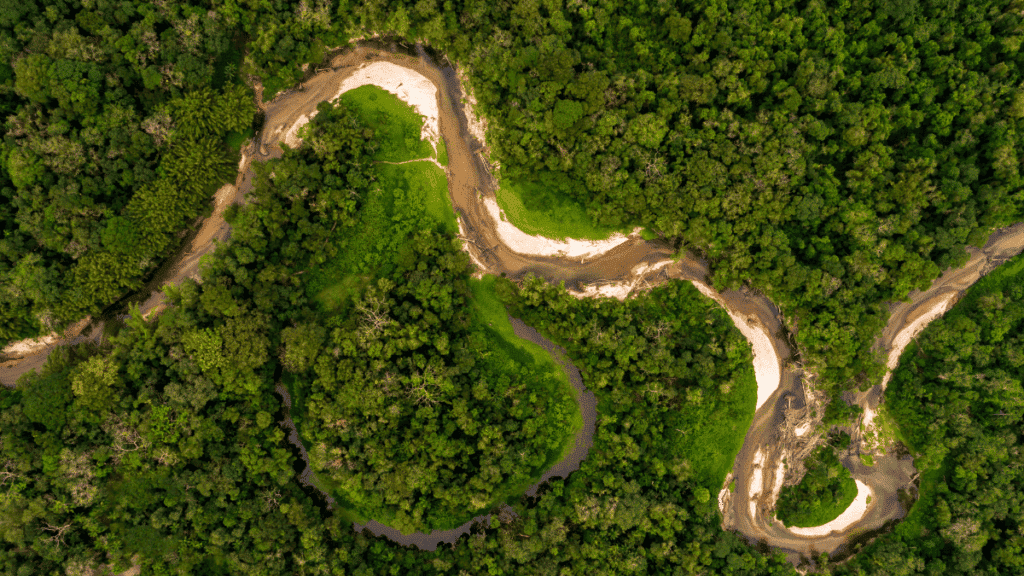
aerial view of the Ecuadorian Amazon with a long, winding path of deforested areas

Ecuador, like much of Latin America, is a victim of this economic model. Despite having freed themselves from colonialism, Latin American countries still rely on exporting commodities and amassing high-interest foreign loans to boost economic development. Ecuador, for example, exports oil extracted from the Amazon to service its debts.

As long as extractive capitalism prevails, Ecuador’s indigenous communities have no choice but to oppose it. We have tried to voice our concerns through peaceful protests, petitions, and lawsuits, and yet our pleas continue to fall on deaf ears. Given this blatant disregard for Indigenous Peoples’ basic human rights, the international community must intervene and enforce the court orders protecting our lands. 

Indigenous Peoples’ ongoing struggle to conserve their lands and traditional ways of life underscores the urgent need for a radical shift in consciousness and practice. We must move beyond the narrow confines of profit-driven economies and embrace a new ethos that emphasises the well-being of individuals, societies, and the planet. 

To this end, Barbadian Prime Minister Mia Amor Mottley’s Bridgetown Initiative calls for far-reaching reforms to the global financial architecture. Making multilateral lenders more responsive to the climate needs of low-income countries would enable critical funds to be directed to the countries that need them most, such as Ecuador. While it may be too optimistic to believe that such reforms would end gold mining in the Amazon, these changes are essential to dismantle today’s exploitative system and put the world on the path to sustainability.

In this time of crisis, let us draw inspiration from the indomitable spirit and unwavering commitment of indigenous communities that have been fighting to protect their lands for centuries. By coming together and embracing alternative economic models, we can compel multinationals to abandon their destructive practices and reclaim a future where Indigenous Peoples’ rights are upheld, our forests are safe, and the well-being of all living things takes precedence over the corporate bottom line.

https://globalalliance.me/wp-content/uploads/2023/08/Tena-1.jpg 1800 2400 Juan Carlos Jintiach https://globalalliance.me/wp-content/uploads/2023/07/global-alliance-of-territorial-communities-logo-tight.png Juan Carlos Jintiach2023-08-04 05:17:212024-10-24 22:46:25Protecting the World’s Forests Means Protecting Indigenous Rights
poster of two people hugging, one wearing a mask, the text says "For Indigenous Lives, stop the Time Frame Thesis"

Indigenous Peoples are facing multiple legal threats that could worsen the climate crisis

June 5, 2023/in News/by GATC

After years of fiercely defending their rights and territories against Bolsonaro’s right-wing government, indigenous peoples in Brazil and the international community were hopeful for a change with the victory from Lula, who ran for presidency with promises to protect the environment and rebuild relationships with indigenous peoples. The creation of the Indigenous Peoples Minister -led by Sonia Guajajara– and the demarcation of six new indigenous territories (some that had been waiting for 30 years to get this status) indicated the turn of an era. 

However, it was short-lived; the anti-indigenous and pro-ruralist agenda still deeply permeates Brazilian politics and society. Large portions of the country are against policies that benefit indigenous peoples, granting them rights over their ancestral lands, and many claim the best way to ‘develop’ the country is through extensive soy planting, cattle ranching and so on. Despite solid evidence that these actions could worsen the climate crisis. Right now, indigenous peoples (IPs) are standing up against at least five laws and legal documents that put their lives and territories at risk. The Marco Temporal thesis ‘Time Frame’ and the PL2940/PL2903 bills want to stop indigenous land demarcation, which could give the green light to ruralist groups to invade and violate the rights of the indigenous peoples who guard biodiversity. 

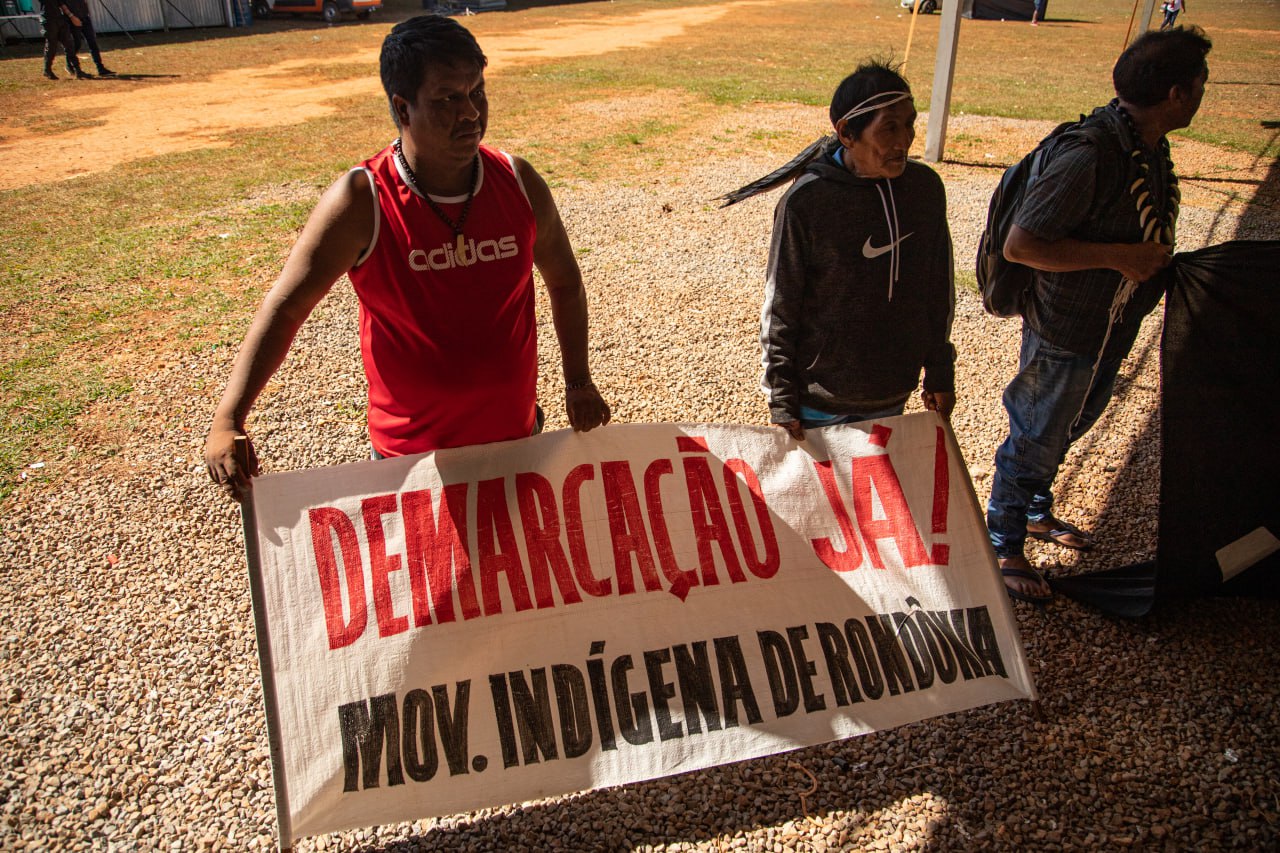
two people holding a sign that says "Land rights now!"
photo: @junomundo
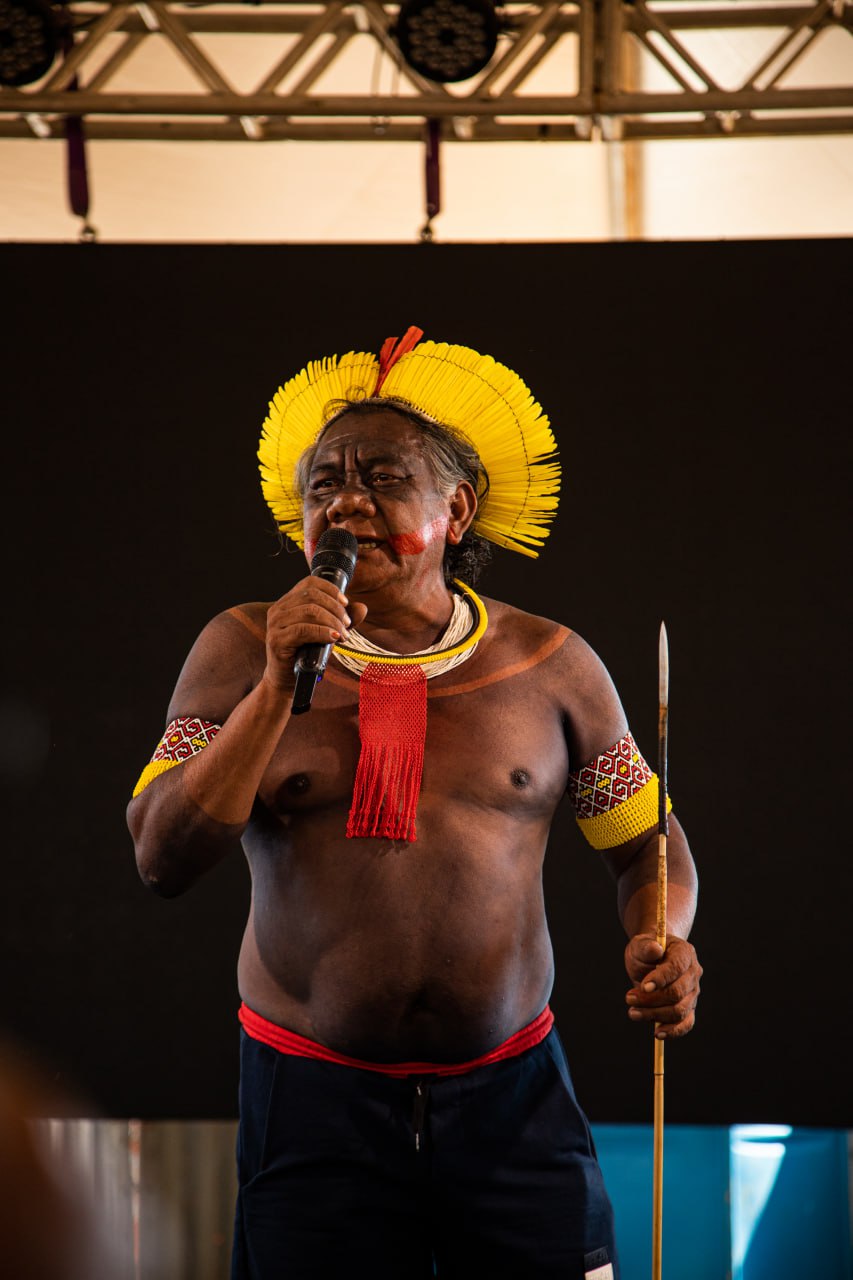
indigenous leader from Brazil addressing a crowd
Indigenous mobilisation against Marco Temporal on the 5th of June.
photo: @junomundo
Kleber Karipuna speaking into a microphone
photo: @junomundo

Moreover, the Chamber of Deputies, the Senate and the Justice system hold members who claim there is already too much land in the hands of indigenous peoples whilst pushing for more significant concessions to mega agricultural projects, oil exploration and mining. Just last week, on the 30th of May, Brazilian deputies approved the PL2940 bill (now called the PL2903), which proposes the release of highway construction, hydroelectric plants, and other works on indigenous lands without free, prior, and informed consultation with IPs; grants authorisation to challenge land demarcation at any stage; loosens the political framework of no-contact with isolated peoples. The bill is set to be reviewed by the Senate in the coming days. The Articulation of Indigenous Peoples of Brazil (APIB) has called for continuous national mobilisations to stop it and is providing live coverage of the situation. 

Threats to indigenous peoples are also carried through the Justice System. The Marco Temporal thesis could turn into a harmful legal precedent soon. The text argues that indigenous peoples are only entitled to the demarcation of their traditional lands if they were occupying these lands on the 5th of October, 1988, the date of the publication of the Federal Constitution of Brazil. According to this thesis, lands occupied by other people on that date cannot be demarcated as indigenous lands. These territories can be considered the property of private individuals or the State, no longer of the original peoples who inhabit them. The thesis has been defended by rural sectors and politicians who argue that the lack of a defined date for the occupation of land occupation by indigenous people generates legal insecurity and land conflicts. However, it is widely criticised by jurists, indigenous organisations, social movements and environmentalists, who point out that the thesis is a threat to the rights of indigenous peoples and an affront to their dignity and survival. In addition, many indigenous communities were expelled from their lands during the military dictatorship and were only able to return after the date established by the thesis, which can result in serious human rights violations. 

The Marco Temporal thesis could be approved on the 7th of June when the Federal Supreme Court will make a ruling on the Xokleng case -a dispute raised by the Environmental Institute of Santa Catarina (IMA by its Portuguese name) against the National Foundation of Indigenous Peoples and the Xokleng people that aims to strip them from ancestral lands. If the IMA wins using the Marco Temporal legal argument, many more legal cases could follow to challenge the demarcation of indigenous lands across the country. 

Tweets by ApibOficial

Scientists across the globe have shown again and again that granting indigenous peoples access to their lands is the most effective way to protect the critical ecosystems that the whole of humanity needs to halt climate change. For example, the most recent study by the Monitoring of the Andean Amazon Project shows that indigenous territories are even more efficient at stopping deforestation and forest loss than nationally protected areas. The data is significant for Brazil, which holds the planet’s most extraordinary biodiversity and fauna; 10% of our world’s species call it home. Additionally, 305 indigenous ethnic groups inhabit these nature-filled territories, providing richness in culture and showing a way to live in connection with nature. 

We are currently at a crossroads to stop the projects mentioned above that threaten the lives of indigenous peoples and, in turn, put the biomes under their guardianship at risk of destruction. The loss of nature and cultural richness in Brazil greatly harms planetary health and sets the global goals to halt climate change in jeopardy. 

How can you help?

  • Follow the Articulation of Indigenous Peoples in Brazil (@apiboficial) to be updated and share their content with the relevant hashtags #MarcoTemporalNão! #VidasIndígenasImportam #NossoDireitoÉOriginário #EmergenciaIndígena #DemarcaçãoJá!
  • Follow the Global Alliance of Territorial Communities (@globalalliancet & @guardiansoftomorrow_)
  • Mobilise authorities, celebrities and influencers to speak up in support of indigenous peoples and our planet.
  • Organise protests in front of Brazil’s Embassies, Universities, the European Parliament, etc.
  • Donate here to support the indigenous mobilisation.
  • Support and promote the visibility of our participation in Bonn, Germany, during UNFCCC events (LCIPP /FWG 9; Indigenous Caucus; SBSTA)
https://globalalliance.me/wp-content/uploads/2023/08/5_indigenous_lives.jpg 1697 2400 GATC https://globalalliance.me/wp-content/uploads/2023/07/global-alliance-of-territorial-communities-logo-tight.png GATC2023-06-05 18:21:162024-10-24 22:50:00Indigenous Peoples are facing multiple legal threats that could worsen the climate crisis
Page 3 of 3123

Pages

  • COP28
  • Food Systems COP16
  • Home
  • MINGA Foodways – COP30 & Beyond
  • Movements
  • Privacy
  • Resilience
  • Shandia Forum 24
  • Strategic Plan 2025 & 2026
  • Strategic Plan 2026
  • Strategic Plan for 2024 and 2025
  • Workshop: Tracking Funds for Indispensable Partners
  • About
  • New York Climate Week 2023
  • News & Events
  • Shandia
  • Transparency
  • tester

Categories

  • Events
  • News

Archive

  • July 2026
  • June 2026
  • March 2026
  • December 2025
  • November 2025
  • September 2025
  • August 2025
  • June 2025
  • May 2025
  • April 2025
  • October 2024
  • September 2024
  • June 2024
  • May 2024
  • December 2023
  • November 2023
  • October 2023
  • September 2023
  • August 2023
  • June 2023
  • November 2022
© Copyright - Global Alliance of Territorial Communities - powered by Enfold WordPress Theme
  • Link to Instagram
  • Link to X
  • Link to Facebook
  • Link to LinkedIn
Scroll to top Scroll to top Scroll to top